What does the Trump meme coin scandal reveal about political crypto tokens?
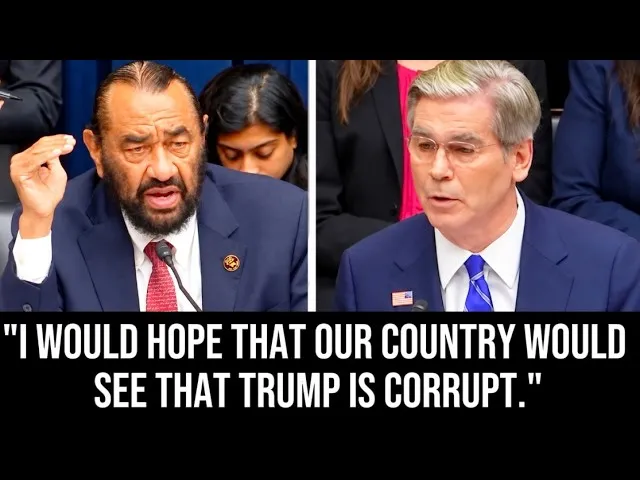
Video: WHOA: Al Green GRILLS Bessent over Trump's meme coin “scam”
You can order the same kind of articles for your own video to boost it on YouTube and Google. Just message the Telegram bot @sat_sit_bot. It writes articles around your video, embeds the video and publishes them on popular niche websites (no ads). Your first 50 articles are free.
· based on the channel Daniel Reed
The Trump meme coin controversy is a case study in how a political brand gets attached to a speculative token with no underlying business. In a congressional hearing, Senator Al Green pressed Treasury Secretary Scott Bessent over the asset, framing it as a scam and asking how the country's top financial official views a sitting president selling a coin to retail buyers. Bessent's answers avoided a direct characterization, and that avoidance is the story: when the Treasury's own language turns evasive, the burden of proof shifts entirely onto the buyer.
What happened when Al Green grilled Bessent over the Trump meme coin
The hearing put two different standards of accountability in the same room. Green's line of questioning treated the token as a consumer-protection problem: a product sold on the strength of a famous name, with no cash flow, no claim on assets and no regulatory filing behind it. Bessent, as Treasury Secretary, is the official whose department monitors financial stability and market conduct, so a direct question about a presidential token should have a direct answer. Instead, the exchange produced hedged language and repeated pivots back to general market principles, which viewers read as reluctance to criticize the administration. The key takeaway is structural rather than partisan: the person best positioned to say whether a token is dangerous declined to say so plainly.
Why meme coins carry no intrinsic value
A meme coin is a token whose price depends almost entirely on the next buyer's willingness to pay more than the last one. There is no revenue, no product, no treasury backing and no contractual right attached to the token. That does not make every trade fraudulent, but it does mean valuation rests on sentiment and attention, both of which decay. The mechanics are unforgiving: supply is typically large or expandable, early holders often hold a disproportionate share, and liquidity thins quickly on the way down. When a political figure's name is the asset, the token's value is tied to news cycles, approval ratings and legal developments the holder cannot control. Anyone buying should be able to state, in one sentence, what they expect to sell to whom and at what price, and most buyers cannot.
The pump-and-dump risk in celebrity and political tokens
The pattern is familiar from low-cap altcoins: a launch with heavy promotion, a rapid price spike, then distribution by insiders while retail holds the bag. Political tokens add a new ingredient, because the promoter may also influence the regulatory environment the token operates in. That is the core of Green's complaint, and it is a legitimate governance question regardless of which party is in power. Watch for these warning signs:
- A supply schedule that concentrates tokens in a small number of wallets.
- Promotion that emphasizes access, exclusivity or loyalty rather than any product.
- Announcements timed to political events, with no disclosure of who is selling.
- Liquidity that can be pulled or unlocked by a handful of addresses.
- No audited contract and no clear legal entity behind the issuer.
The questions buyers keep asking about political tokens
The same doubts come up repeatedly from people watching this debate. One is whether buying a token amounts to buying influence, which is a fair question when the issuer is a public figure and the token grants perks such as event access. Another is whether the whole crypto market is a Ponzi scheme; the honest answer is no, because Bitcoin and regulated exchange products have liquid markets, custodians and years of price history, while a themed token launched on a name has none of that. A third is whether participants should have known better. They often did, and that does not remove the obligation of the seller or the regulator to describe the product accurately. A fourth is the laundering concern raised in public discussion: pseudonymous tokens with thin oversight are attractive to people moving money for reasons beyond investment, which is exactly why disclosure and know-your-customer rules exist.
How to evaluate any meme coin before buying
Treat every meme coin as a lottery ticket with a marketing budget, and size the position accordingly. Start with the contract: check whether mint authority is renounced, whether liquidity is locked and for how long, and who holds the top wallets. Then look at the distribution, because a token where ten addresses control most of the supply is a token where ten people decide your exit price. Read the issuer's disclosures, if any exist, and note what is missing. Assume the promotional narrative is designed to create urgency, and set an exit rule before entry rather than after. Finally, apply a simple test: if the celebrity name disappeared tomorrow, would anyone still want the token? For most of these assets the answer is no, and that answer should determine position size.
What the hearing signals for crypto regulation in 2026
The exchange matters beyond one token because it shows legislators treating political memecoins as a financial-stability and ethics issue, not a niche hobby. Treasury has broad authority over illicit finance and market integrity, and sustained congressional pressure tends to produce guidance, reporting requirements or enforcement priorities even without new legislation. For traders, the practical implication is that tokens tied to public figures face elevated headline risk: a single hearing, subpoena or disclosure can reprice them in minutes. Daniel Reed's breakdown of the hearing captures how quickly the discussion moved from a specific coin to the credibility of the officials overseeing it, which is the frame regulators are likely to keep using.
The bottom line on the Trump meme coin fight
The Trump meme coin dispute is less about one token than about who answers when a speculative product is sold on a famous name. Senator Al Green used the hearing to force that question, and Treasury Secretary Scott Bessent's evasiveness left it open. Buyers of any political or celebrity token should assume no one is protecting them, verify supply and liquidity themselves, and keep positions small enough to lose. Daniel Reed's video breakdown is a useful record of how the argument played out in the room.
Key takeaways
- Senator Al Green questioned Treasury Secretary Scott Bessent about the Trump meme coin during a congressional hearing.
- Bessent is the sitting US Treasury Secretary, the official responsible for financial stability and market oversight.
- Green framed the token as a scam, while Bessent's responses avoided a direct characterization of the asset.
- The exchange centered on whether a sitting president should profit from a speculative token sold to retail buyers.
- Meme coins have no cash flow, no claim on assets and no utility beyond trading sentiment.
Questions & answers
Is the Trump meme coin a scam?
There has been no court ruling declaring the token a scam, so the label remains an allegation made by critics such as Senator Al Green. What is verifiable is that the token has no cash flow or asset backing, and its price depends on continued demand. Buyers should judge it on disclosure and supply concentration rather than on the name attached to it.
Why did Bessent refuse to call it a scam?
Bessent is the sitting Treasury Secretary and answers to the administration whose figure launched the token, which creates an obvious conflict. His responses leaned on general market principles instead of a direct verdict. That silence is itself informative, because the official responsible for financial stability declined to characterize the product plainly.
Are all meme coins Ponzi schemes?
No. A Ponzi scheme pays early participants with money from later ones under a false promise of returns, while a meme coin is an openly speculative asset with no promised return. The two overlap when insiders quietly distribute holdings to retail buyers, which is why supply distribution and liquidity locks matter more than the marketing story.
What should I check before buying a political token?
Check whether mint authority is renounced, whether liquidity is locked and for how long, and how concentrated the top wallets are. Read any disclosures from the issuer and assume promotion is designed to create urgency. If the token would have no buyers without the famous name, size the position as a lottery ticket rather than an investment.
Source: WHOA: Al Green GRILLS Bessent over Trump's meme coin “scam” · Markdown version